


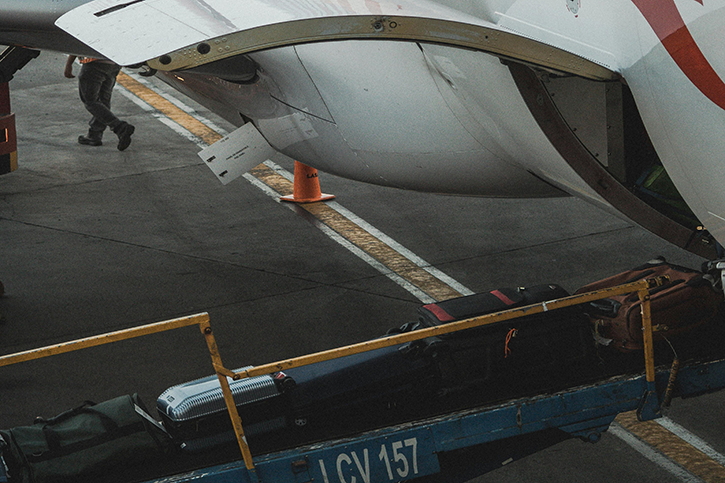


Understanding Dangerous Goods in Air Travel
Dangerous goods are articles or substances that can pose a threat to people, property, or the environment when transported by air.
While some items—like explosives or toxic substances—are clearly hazardous, others might be less obvious. Everyday products such as aerosols, fragrances, and devices containing lithium batteries (like vapes, smartphones and laptops) are also considered dangerous goods.
The transport of Dangerous Goods by Air is governed worldwide by ICAO under Annex 18 to the Chicago Convention on International Civil Aviation. The Standards and Recommended Practices contained in Annex 18 are amplified in ICAO Doc 9284 Technical Instructions for the Safe Transport of Dangerous Goods by Air, known as the Technical Instructions.
DG Definitions - ICAO Annex 18
The Irish Aviation Authority, under Aeronautical Notice O.1, directs that materials or goods classified as dangerous, when carried in an aircraft, be transported in accordance with the current edition of the ICAO Technical Instructions, as amended.
An addendum to the 2025-2026 edition of the Technical Instructions has issued, effective 27 March 2026. The addendum makes changes in relation to power banks for passengers onboard an aircraft.
The Addendum can be found here.
See also IAA DG Info 004 on this subject here.
Many entities use IATA DGR. See IATA Publication on the upcoming significant changes and amendments in the upcoming 68th Edition (January 2027)

.png?sfvrsn=b8b99557_0)


8fa067d0c58e42c4adc7d8206ef45f46.png?sfvrsn=922e2552_0)